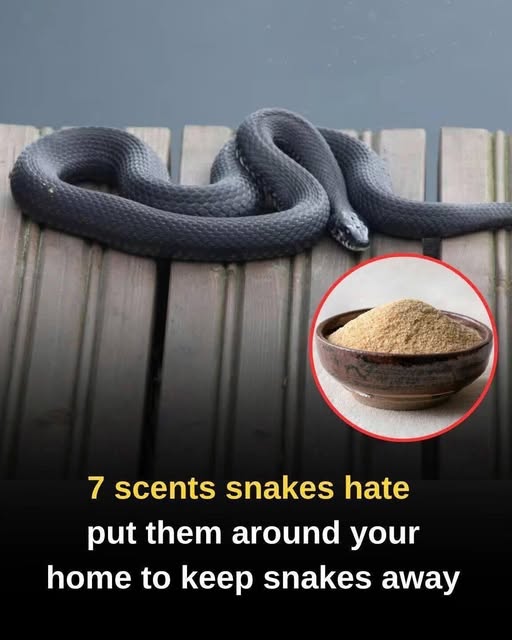
From Ammonia and Vinegar to Cinnamon Oil, Garlic, and Lemongrass, These Seven Strong Scents May Help Deter Snakes Around Your Home—But Experts Explain Why No Smell Works Forever, How to Use Them Safely, and What Real Prevention Steps Matter Most for Keeping Snakes Away Long-Term
Snakes have long stirred both curiosity and fear, especially when they appear near human homes. Though they play an important role in nature—helping control rodents and insects—most people prefer they remain far from porches, gardens, and living spaces. When a snake is spotted nearby, the first instinct is often not to harm it, but simply to encourage it to move on.
Many natural deterrents focus on scent, because snakes rely heavily on chemical sensing rather than sight or hearing. Their awareness of the environment comes through subtle signals that humans rarely notice, making strong odors especially disruptive.
Ammonia is frequently mentioned for this reason. Its sharp smell can overwhelm a snake’s senses and prompt it to retreat. When placed carefully outdoors near sheds, crawl spaces, or entry points, it may discourage lingering. However, it evaporates quickly and must be reapplied often. It can also be harmful to pets and people if misused, so caution and restraint are essential. It should never be used indoors.
Essential oils such as cinnamon and clove are another popular option. These contain natural compounds that temporarily overstimulate a snake’s sensory system. When mixed with water and applied along foundations, doorways, or garden borders, they may create a short-term barrier. Rain and humidity reduce their effectiveness, reminding us that such methods require patience and consistency.
Garlic and onions are also commonly used. When crushed, they release sulfur-based compounds with strong odors that can confuse snakes and make an area less inviting. Some homeowners plant marigolds, which reduce insect and rodent activity, indirectly removing a major food source. Rather than forcing nature away, this approach quietly shifts the balance.
Other natural options include vinegar, lemongrass, and citronella. Vinegar works best in damp areas, while citrus-based plants and oils interfere with scent tracking. These methods are generally safer for the environment, though they require ongoing care and attention.
In the end, scent deterrents alone are rarely enough. Long-term prevention comes from removing shelter, sealing gaps, clearing debris, and managing rodents. When the environment is orderly, unwanted visitors naturally move elsewhere.
There is wisdom in choosing solutions that protect both our homes and the life around us. Fear often leads to destruction, but understanding leads to balance. With thoughtful maintenance and gentle deterrence, it is possible to live safely while respecting the role each creature plays in the wider design of nature.
Small acts of care—cleaning a yard, sealing a crack, choosing a natural solution—may seem minor. Yet together, they create harmony between human space and the world beyond it.