My Family Skipped My Clinic’s Opening, Calling It a Guaranteed Failure — Two Years Later, They Wanted In on My Success
Version A — Polished rewrite (same story, stronger flow)
The Inevitable Failure
My entire family didn’t come to the opening of my clinic because they “didn’t want to be associated with an inevitable failure.” Not a single relative showed up—not even my parents. Two years later, when they saw my clinic bringing in eight million dollars a year, they arrived with partnership papers.
I didn’t need to raise my voice.
I just smiled—and gave them my answer.
Opening day, my suite sat in a strip mall off a highway exit, wedged between a Dunkin’ Donuts and a nail salon. People hurried past in winter coats, clutching paper cups like they were holding their mornings together.
Inside, warm lights and new chairs tried to hide what I couldn’t forget: a few months earlier, this had been a dusty dental office I gutted on Sundays with my own sore hands. The walls still smelled faintly of fresh paint. The equipment gleamed—new, financed, and tied to loan payments that made my stomach clench whenever I thought too long about them.
I’d mailed invitations on thick cream stationery, addressed the way old-school doctors like things: full titles, no shortcuts, no excuses.
Dr. and Mrs. Harrison Hayes request the honor of your presence…
My father built his reputation in cardiac operating rooms. Dr. Harrison Hayes Sr., Chief of Cardiothoracic Surgery, the man whose techniques were taught in medical schools. My mother, Dr. Patricia Hayes, lectured at Johns Hopkins, published constantly, and spoke in sentences that sounded like verdicts.
Marcus—my older brother—was the golden child. Chief Resident in Neurosurgery at Mass General. Prestige stamped onto every part of his life.
When I chose plastic surgery, our mahogany dining table went cold.
They called it “cosmetic.” They said it wasn’t real medicine. They told me I was wasting my education on vanity procedures and rich patients who wanted to look younger instead of saving lives that mattered.
“You’re better than this, Sophia,” my father said over dinner the night I told them about my fellowship acceptance. “Plastic surgery is what doctors do when they can’t handle real specialties.”
“It’s a legitimate field—” I began.
“It’s elective procedures for people with more money than sense,” my mother cut in. “Eight years of training, and you’re going to throw it away playing Michelangelo with people’s faces.”
Marcus didn’t defend me. He just watched with something that might’ve been pity.
“I’m still doing reconstructive work,” I insisted. “Trauma cases. Cancer reconstruction. Burn victims—”
“And Botox parties,” my father snapped. “Don’t pretend this is about helping people. This is about making money off insecurity.”
By the end of that dinner, they’d made their position clear: if I pursued this path, I’d do it without their financial support, without their professional network, and without the Hayes name lending me credibility.
“When you fail,” my mother said coldly, “and you will fail, don’t come asking us to bail you out.”
So I learned independence the hard way.
I finished residency while my family attended Marcus’s graduation ceremony. They skipped mine for “scheduling conflicts.” I completed my fellowship while living in a studio apartment that smelled like mildew, with heat that worked only when it felt like it.
I burned through instant coffee at 3 a.m., lived on noodles between study sessions, and took brutal side shifts at urgent care to make extra money. While other residents had family support and trust funds cushioning their leap into private practice, I had spreadsheets, loan calculators, and rejection letters.
At one interview, a senior partner leaned back in his chair and asked, “You’re Harrison Hayes’s daughter?”
When I nodded, he said, “He told me you abandoned real medicine for cosmetics. We’re looking for someone more serious.”
That was the moment I realized my father hadn’t just disagreed with me.
He’d been quietly sabotaging me.
So I stopped using the Hayes name professionally. I became Dr. Sophia Reed—my mother’s maiden name—and stopped mentioning my family at all.
I saved every dollar. I worked surgery shifts, urgent care weekends, consulting gigs that paid in cash. I lived like a resident for years after I no longer had to, accumulating capital while my peers bought homes and cars.
Then I found the space: a defunct dental office in a strip mall off Route 9, between a Dunkin’ Donuts and a nail salon. It was cheap because it was ugly. Cheap because it was inconvenient. Cheap because established surgeons didn’t want their names anywhere near it.
But the bones were good. The rooms were large enough. And most importantly, I could afford it.
Renovation was six months of constant pressure.
I hired contractors I could barely pay. I negotiated with suppliers. I pulled permits myself. I failed inspections twice. Financing fell through once and I had to scramble for lenders at higher interest rates. My opening date got pushed back three times.
On Sundays, I gutted the place with my own hands—tearing out cabinets, ripping up stained carpet, painting walls until my shoulders screamed.
One contractor, Mike, a guy in his fifties who started out skeptical, began showing up on his days off to help.
“You’ve got guts, Doc,” he said while we installed new lighting. “Most surgeons wouldn’t touch a wrench. They’d write checks and expect other people to do the work.”
“I can’t afford to just write checks,” I said.
He nodded. “Yeah, but even if you could, you wouldn’t. You’re building something that matters to you.”
He was right. Every tile, every wall, every fixture mattered because this was mine. Built from nothing. No family money. No institutional backing. Just determination and a terrifying amount of debt.
And finally, it was ready.
Clean lines. Good lighting. Equipment that worked. A waiting room that felt calm instead of clinical.
I named it Hayes Aesthetic & Reconstructive Surgery—reclaiming the family name they tried to deny me.
I sent invitations three weeks before opening day. Formal. Professional. Cordial.
My mother texted back: We can’t in good conscience attend the opening of a practice we don’t believe in. When this fails, as it inevitably will, at least the Hayes name won’t be publicly associated with your poor judgment.
My father didn’t respond at all.
Marcus sent: Sorry, working that weekend. Good luck though.
Then the family group chat lit up. I wasn’t supposed to see it—but I did.
We can’t be associated with this inevitable failure.
The Hayes name means something in medicine.
Six months. I give it six months before she’s begging Harrison to bail her out.
I read those messages sitting on the floor of my empty clinic the night before opening day, and something inside me hardened into steel.
Fine.
I’d do it alone.
Opening day arrived like a dare.
I came early. Unlocked the doors. Turned on every light. The clinic looked perfect—professional, clean, ready.
My staff arrived—two nurses, a receptionist, an office manager named Janet.
“This is really happening,” Janet said, eyes wide.
“We did it,” I corrected. “None of this happens without a team.”
By ten, people started arriving. Not patients—colleagues. Doctors I’d worked with. Nurses who’d seen my hands in the OR. Mike arrived wearing a suit jacket over his work shirt.
Local business owners came too—the nail salon owner, the Dunkin’ manager, the dry cleaner.
“Welcome to the neighborhood,” the nail salon owner said, handing me a small plant. “It’s good to have a doctor here.”
Strangers wandered in, curious. I gave tours. Answered questions. Scheduled consultations.
By evening, thirty people had walked through my doors.
My family never did.
Not my parents. Not Marcus. Not a single relative.
That night, exhausted and emotionally wrung out, I checked the group chat one last time before leaving it permanently.
Thank God none of us went. Can you imagine being photographed at that strip mall clinic?
Ambition without wisdom is just stubbornness.
Six months. Calling it now.
I left the chat, turned off my phone, locked up, and went home. I cried for exactly twenty minutes.
Then I washed my face and made myself a promise:
I would make this work—not just to prove them wrong, but because I refused to let this dream collapse.
The first year was brutal.
Patients came slowly at first. I did free consultations. I worked weekends. I took complicated cases other surgeons didn’t want.
Breast reconstruction for cancer survivors. Scar revision for burn victims. Cleft palate repairs for children. Trauma reconstruction for accident victims. Facial reconstruction for domestic violence survivors who wanted their reflection back.
And yes, Botox. Fillers. Cosmetic procedures that kept the lights on while I built reputation and referrals.
Word of mouth did what prestige never could.
By the end of year one, I was breaking even.
By the end of year two, my accountant slid a report across my desk.
“I think you’re going to want to sit down,” she said.
The number at the bottom read:
$8,200,000.
Annual revenue projection.
I stared like it was a typo.
“It’s right,” she said. “You’re averaging just under seven hundred thousand a month. Net profit around two point three million.”
I didn’t know whether to laugh or cry.
Six months later, my receptionist buzzed my office line.
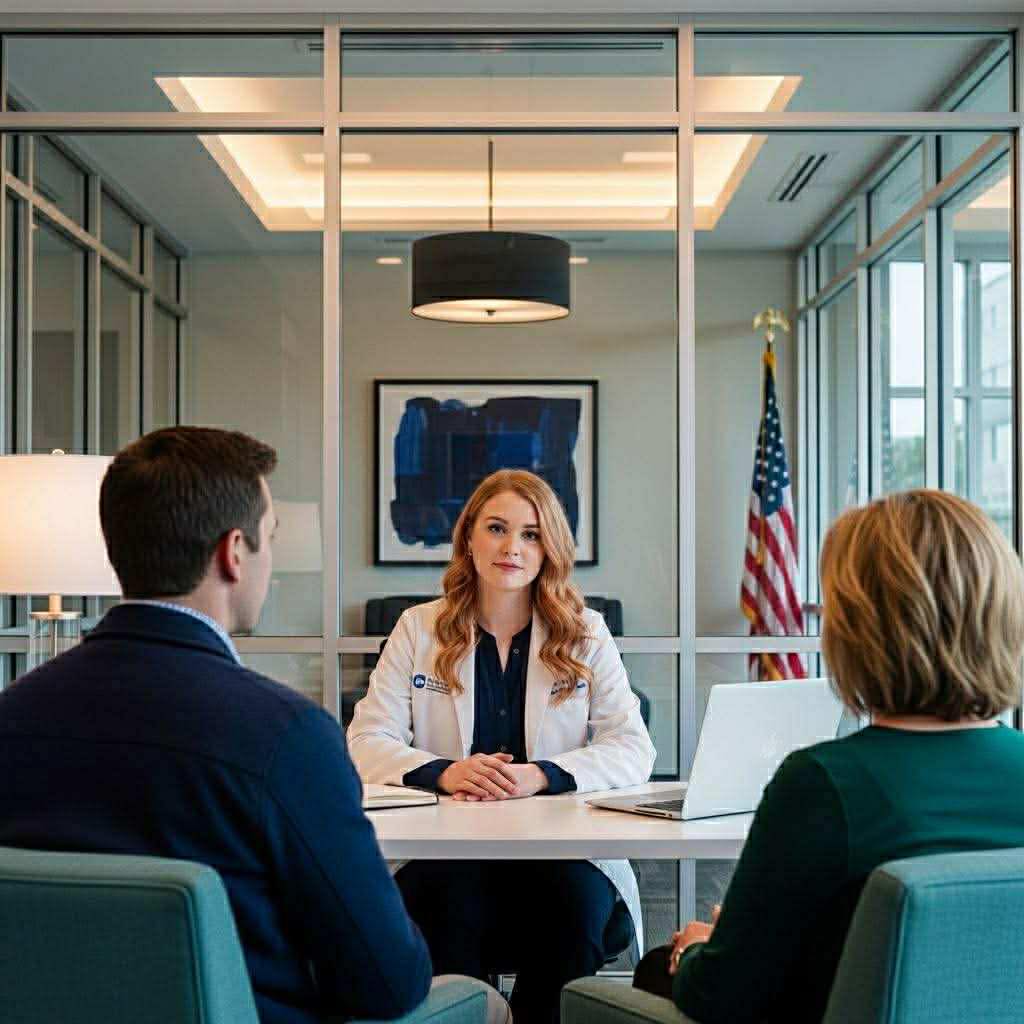
“Dr. Reed… your family is here.”
I froze.
“They say they’re your parents and your brother.”
I checked the time. I had twenty minutes before my next consultation.
“Send them in.”
They walked into my office dressed like they were headed to a donor gala. My father looked around at the diplomas, the framed thank-you cards, the full parking lot.
“The clinic looks… impressive,” he said.
My mother smiled the way she did when she wanted something. “Thank you for seeing us without an appointment.”
“I have twenty minutes,” I said. “What do you want?”
My father placed a crisp folder on my desk. “We came to discuss a business opportunity. We’ve been following your success—”
“Have you?” I cut in. “Because you haven’t called in two years.”
“We were giving you space,” my mother said smoothly.
“You told colleagues I abandoned real medicine,” I said quietly. “You stayed away from my opening because you didn’t want to be associated with an ‘inevitable failure.’”
Silence.
Marcus shifted, uncomfortable.
My father cleared his throat. “We may have been overly cautious. But your outcomes are excellent. Your revenue is extraordinary.”
“How do you know my revenue?” I asked.
“We have connections,” my mother said. “People talk.”
My father slid the folder closer. “We’d like to propose a partnership. The Hayes name carries weight. With our network, we can expand, build something truly significant.”
I opened the folder.
Ownership percentages.
My parents: forty percent.
Marcus: fifteen percent.
Me: forty-five percent.
They wanted majority control of what I built alone.
I read every page. Slowly. Fully.
Then I closed the folder and looked up.
“So you want me to give you fifty-five percent of my clinic,” I said, calm, “in exchange for your name and your connections.”
“That’s one way to put it,” my father said.
“It’s the accurate way,” I replied. “What exactly are you contributing?”
“The Hayes name—” my mother started.
“I already have it,” I said. “The clinic is registered as Hayes Aesthetic & Reconstructive Surgery. I reclaimed the name you tried to keep from me.”
“Our network—” my father began.
“I don’t need it,” I said. “My patients don’t care who my parents are. They care that I do excellent work.”
Marcus tried softly, “We could help with expansion—”
“I have investors interested in expansion,” I said. “And I have the revenue to finance growth myself.”
My father’s voice shifted into lecture mode. “Don’t let pride cloud your judgment. This is an opportunity—”
“An opportunity to let the people who predicted my failure take credit for my success?” I smiled.
It wasn’t a warm smile.
“No, thank you.”
My mother’s expression hardened. “You’re being unreasonable.”
“Unreasonable is showing up after two years of silence and asking for fifty-five percent of something you tried to undermine,” I said.
“We’re your family,” Marcus offered.
“You’re my relatives,” I corrected. “Family shows up. Family supports you even when they disagree.”
I pushed the folder back across the desk.
“I don’t need your name. I don’t need your network. And I don’t need partners who only appear when they smell profit.”
My father stared at me like he couldn’t compute it. “Sophia, think about what you’re turning down—”
“I have,” I said. “And I’m saying no.”
That was the moment I realized I didn’t need to argue.
I didn’t need to defend myself.
I didn’t need to raise my voice.
I just smiled—
And gave them my answer.
No.
Version B — If you only want a better ending (punchier close)
If you want the last 2–3 paragraphs to hit harder, you can swap your ending for this:
The partnership papers went back into the folder like they belonged in a museum—an artifact from a version of my life where I still begged for approval.
My father’s face tightened. My mother’s posture went rigid. Marcus looked like he wanted to apologize with his whole body but didn’t yet know how.
I stood up, checked the clock, and made it simple.
“I have a patient waiting,” I said.
I didn’t argue. I didn’t negotiate. I didn’t explain myself the way I used to at that mahogany table.
I just smiled—because I finally understood what they never did.
The clinic wasn’t successful because the Hayes name carried weight.
It was successful because my hands did.And when they walked out, I felt something I hadn’t felt in years: peace.
Not because they approved—
but because I didn’t need them to.