I Adopted a 3-Year-Old Girl After a Fatal Crash – 13 Years Later, My Girlfriend Showed Me What My Daughter Was Hiding!
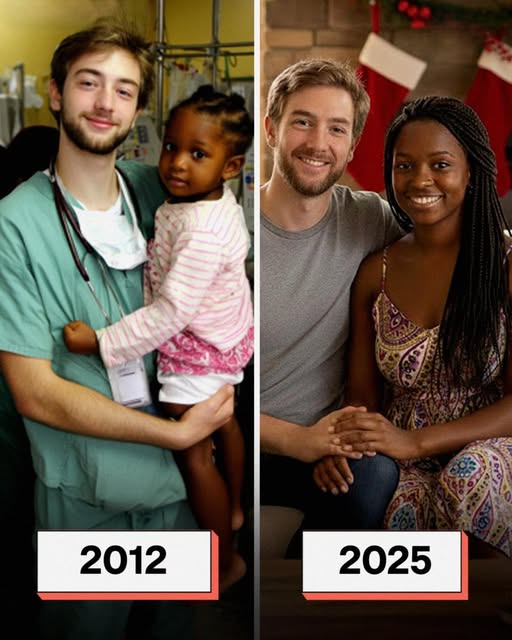
Thirteen years ago, I walked into my ER shift as a brand-new doctor, still fighting the tremor in my hands when the monitors began to scream. By the time the sun crested the horizon, I had walked out as a father, though the legal system would take years to catch up to what my heart already knew. I was twenty-six, barely six months out of medical school, when the paramedics burst through the doors with a wreckage that had swallowed a family whole. Two stretchers carried still forms beneath white sheets; the third gurney carried a three-year-old girl named Avery.
She wasn’t crying. Her big, wild eyes jittered around the trauma bay, searching for a familiar face in a room full of strangers and sterile steel. Her parents were gone before the sirens even faded. I wasn’t supposed to be her person; I had a ward full of patients and a mountain of charts. But when the nurses tried to move her, she grabbed my arm with a strength born of pure terror and refused to let go. She whispered my name and “please don’t leave” like a mantra, as if her voice alone could hold the world together.
I should have stepped away. Instead, I sat down. I read a picture book about a lost bear four times because she needed to hear that some stories still had happy endings. When she touched my ID badge and called me “the good one,” I had to hide in a supply closet just to remember how to breathe. The next morning, social services spoke of temporary foster placements and a lack of known relatives. Avery’s world was being reduced to a caseworker’s file. When the woman told me Avery was leaving with a stranger, the words jumped out of my throat before I could stop them: “Can I take her?”
The caseworker looked at me like I’d lost my mind. I was a single man in residency working graveyard shifts. It was the least logical decision a person could make. But I couldn’t watch her be carried away again. One night became a week, and a week became a lifetime of home inspections, background checks, and parenting classes squeezed between twelve-hour shifts. The first time she called me “Daddy” in the cereal aisle of a grocery store, she flinched, waiting for a correction. I knelt down, looked her in the eye, and told her she could call me that as long as she wanted. Six months later, the adoption was final.
Avery grew into a bright, sharp, and brilliantly stubborn teenager with a dry sense of humor and eyes that mirrored the biological mother she barely remembered. She was my entire heart. Because I had seen how quickly a life could be erased, I was cautious about who I brought into our sanctuary. Then I met Marisa. She was a nurse practitioner—polished, capable, and seemingly unfazed by the chaos of a single-father household. Avery was wary but eventually warmed to her. After eight months, I had a velvet box hidden in my nightstand, convinced I had finally found a partner to share the load.
The illusion shattered on a Tuesday evening. Marisa didn’t greet me with a smile; she met me with “security footage” on her phone. She showed me a hooded figure in our hallway entering my bedroom and stealing cash from my emergency reserve in the safe. Marisa’s voice was dripping with a staged, righteous sorrow as she pointed the finger at Avery. “You’re blind where she’s concerned,” Marisa warned. “She’s sixteen, not an angel. You have to be realistic.”
My stomach turned. I went upstairs to find Avery studying. When I asked her if she’d been in my room, her confusion shifted into a raw, defensive hurt. She told me her favorite gray hoodie—the one seen in the video—had been missing for days. Something cold and clear settled in my gut. I went back downstairs and asked Marisa a simple question: “What code did you see being entered on the keypad?”
She stammered. The camera angle she had “set up for me” didn’t show the keypad. I pulled out my own phone, opened the security app, and scrolled back a few minutes before the clip she had cherry-picked. There was Marisa, standing in the hallway holding Avery’s missing hoodie. The footage showed her entering my room, kneeling at the safe, and typing the code she’d obviously spied on earlier. She looked directly into the lens with a small, chilling smile before performing a second “act” while wearing the hoodie to frame my daughter.
“Explain this,” I said, turning the screen toward her.
The mask slipped. Her face hardened into something ugly and sharp. She didn’t deny it; instead, she justified it. She told me Avery wasn’t “really” my daughter because we didn’t share blood. She claimed she was trying to “open my eyes” before Avery left at eighteen and left me alone. She viewed my daughter as a charity case, a rival for my attention and resources.
“Get out,” I said. My voice was low, but it occupied every inch of the kitchen.
She mocked me, claiming I was choosing a stranger over a future with her. She even had the gall to pull the engagement ring she’d found out of her purse, trying to use my own love for her as a weapon. I took the box, opened the door, and told her that if she didn’t leave, the footage would go straight to the police and her HR department. She walked out with her head high, leaving a trail of bitterness behind her, but the door couldn’t close fast enough.
I turned to see Avery on the stairs, her face pale, having heard the woman she almost trusted call her “not a real daughter.” I crossed the room and pulled her into a hug that I hoped could shield her from the world’s cruelty. I told her that blood is just biology, but family is what we choose and what we fight for. She had chosen me in that ER thirteen years ago, and I had chosen her every single second since.
The following days were a whirlwind of police reports and blocking Marisa’s desperate, manipulative messages. To reinforce the walls of our home, I sat Avery down and showed her her college fund and our financial plans. I told her I wasn’t doing this for a “hypothetical perfect daughter,” but for the real one—the one who spilled milk on my scrubs, the one who asked if spiders understood English, and the one who forgot her gym shoes every other week.
Thirteen years ago, a terrified little girl decided I was “the good one.” I’ve spent over a decade trying to live up to that title. I’ve made mistakes, burned dinners, and felt the weight of single parenthood, but I have never regretted the choice I made. Some people will never understand that family isn’t defined by a genetic map. It’s defined by the hand you hold during the worst moment of someone’s life, and the refusal to let go when the rest of the world tells you it’s time to move on. She chose me once; I will spend the rest of my life choosing her back.