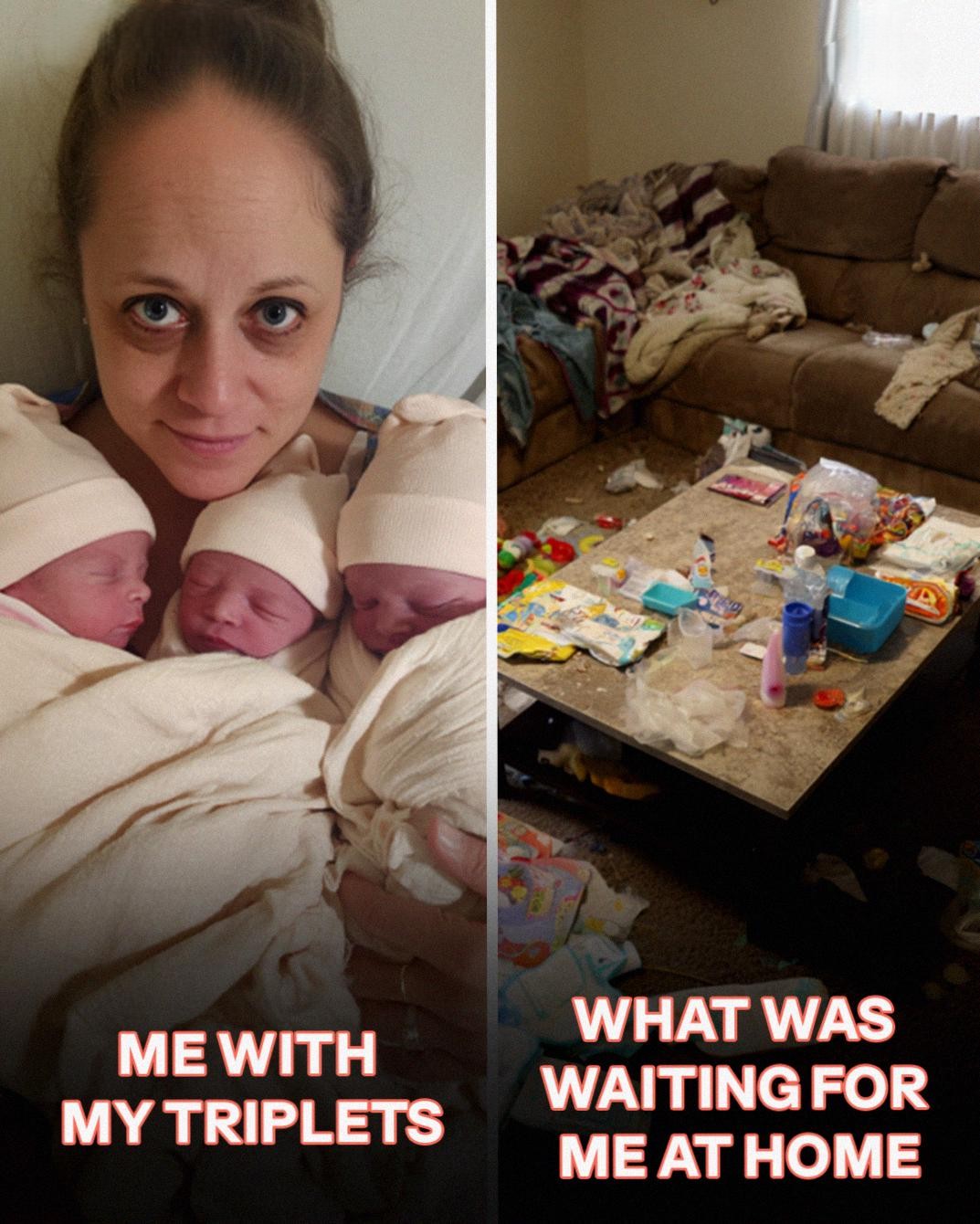
I Came Home with Newborn Triplets and My Husband Humiliated Me on Instagram – So I Planned a Night He Would Never Forget!
The day I brought my newborn triplets home from the hospital should have been a celebration of survival and a triumphant entry into motherhood. Instead, it was the beginning of a cold, calculated lesson in accountability. My delivery had been brutal—hours of labor culminating in an emergency C-section and a grueling recovery—but my husband, Sam, met me at the door with his arms crossed and a scowl on his face. There were no balloons, no embrace, and no help with the three car seats I was struggling to maneuver. His first words were not of welcome, but of a perceived grievance: “Finally, you’re home. You could’ve given birth faster. The apartment has gotten filthy.”
I stood in the entryway, physically drained and emotionally hollowed out, watching him turn back to the couch and his phone without so much as a glance at his three daughters. As I hobbled further into the apartment, the smell hit me first—a thick, putrid odor of rotting organic matter and stagnant air. When I reached the living room, I froze. The space had been transformed into a literal dumpster. Plates crusted with weeks-old food were scattered across every surface, a mountain of takeout containers obstructed the television, and used toilet paper sat casually on the coffee table.
When I confronted Sam, his response was a masterpiece of gaslighting. He gestured to the filth with a shrug, claiming it was a mess I had made by being absent. “I told you, you should’ve come back sooner,” he muttered, “because nobody’s been cleaning the apartment.” The sheer audacity of his statement left me breathless. While I was fighting for my life and the lives of our children in a hospital bed, he had sat in our home and allowed it to rot, blaming me for his own inability to function as a basic adult.
The final straw came an hour later. While I was struggling to soothe three crying infants simultaneously, my phone buzzed with an Instagram notification. Sam had posted a photo of the disgusting living room with the caption: “MY SLOBBY WIFE HASN’T CLEANED THE APARTMENT IN A MONTH. DOES ANYONE KNOW WHEN THIS IS GOING TO STOP?” Within minutes, strangers were flooding the comments with vitriol, calling me lazy and useless. The humiliation was sharp and public, but in that moment, my tears dried. A cold, sharp clarity took their place.
I didn’t argue. I didn’t scream. Instead, I walked into the living room, gave him a soft hug, and whispered that I was sorry. I told him I wanted to take him to a celebratory dinner the following night to mark our reunion. He smirked, satisfied that his public shaming had “worked” to put me back in my place. He had no idea that I was already spending the next twenty-four hours making phone calls and preparing a presentation.
The next evening, I arranged for my sister to watch the triplets. Sam dressed in a crisp button-down shirt, buoyed by the attention he thought he was receiving. In the car, I convinced him to wear a blindfold, telling him I had a grand surprise planned. I guided him into a house, through a hallway, and into a room where I could hear the muffled sounds of a crowd. When I finally untied the blindfold, Sam blinked in the sudden light. He wasn’t at a restaurant; he was standing in his sister’s living room. Surrounding him were his parents, my parents, and our closest friends and extended family.
The confusion on his face turned to a nervous smirk as he asked what was going on. I stepped to the front of the room, standing beside a large television. “I asked everyone here because I’m worried about you, Sam,” I said, my voice steady and grave. “I don’t think you have the basic life skills to take care of yourself, and we’re all here to support you.”
I turned on the TV and began a slideshow. First, I displayed his Instagram post for everyone to see. Then, I swiped through a series of high-definition photos I had taken of the apartment: the petri-dish plates, the overflowing trash, and the horrific state of the bathroom. Gasps rippled through the room. My mother-in-law covered her mouth in shame, and Sam’s father leaned forward, his face hardening into an expression of pure disappointment.
Sam tried to laugh it off, claiming I was just trying to blame him for my mess, but I didn’t let him gain an inch of ground. I read his own caption aloud to the group and pointed out the undeniable logic: “I was in the hospital for thirty days. This mess was created during those thirty days. If Sam believes this is my mess, then it means he spent a month living in filth because he literally does not know how to pick up a plate or throw away a bag of trash.”
The room shifted from uncomfortable silence to a chorus of reprimands. Sam’s mother asked him if he had forgotten everything she had taught him about basic hygiene. His father stood up and told him that posting such a lie about his wife while she was recovering from a C-section was nothing short of shameful. Sam’s shoulders slumped as he realized he had lost control of the narrative. He was no longer the “victim” of a lazy wife; he was exposed as an incompetent, malicious partner.
I delivered the final blow with the television still glowing behind me. “We have three daughters now,” I said, looking him in the eye. “If you won’t do these things for yourself, I have to assume you won’t do them for them. If I’m responsible for every single domestic task, every childcare duty, and cleaning up after a grown man who refuses to function, then I don’t need the additional work of keeping you.”
The room went deathly quiet. I informed him that I was taking the girls to my parents’ house immediately. I told him that if he wanted to save his marriage and his relationship with his daughters, he would spend the night cleaning every inch of that apartment and he would issue a public retraction on the same platform he used to humiliate me.
Later that night, as I settled the triplets into the safety of my childhood bedroom, I checked my phone. A new post appeared on Sam’s feed. It showed him with a vacuum and a trash bag, looking exhausted and humbled. The caption read: “I was wrong. I disrespected my wife when she needed me most. The mess was mine, and I was a coward for blaming her. I’m doing the work to be better.”
I don’t know if a single night of public exposure can fix a fundamental character flaw, or if Sam will truly change. But as I watched my three daughters sleep, I knew one thing for certain: the era of my silence was over. Sometimes, you have to hold up a mirror so bright and so public that a person has no choice but to see the ugliness they’ve been hiding. I wasn’t going to be anyone’s scapegoat again, and if Sam wanted to be a father to these girls, he was going to have to learn how to be a man first.