Man Who Attacked Rep Omar Identified, Background Reveals Alarming Details
The security of public officials and the sanctity of the democratic process have once again become the focal point of national conversation following a jarring assault on Representative Ilhan Omar. The incident occurred earlier this week during what was intended to be a routine town hall event in Minneapolis, Minnesota. As constituents gathered to engage in a dialogue regarding immigration enforcement and the recent localized actions of Immigration and Customs Enforcement (ICE), the atmosphere of civic engagement was shattered by a sudden act of physical intimidation. The assault has not only prompted a deep dive into the background of the perpetrator but has also reignited a broader debate about the rising tide of hostility directed at elected representatives in the United States.
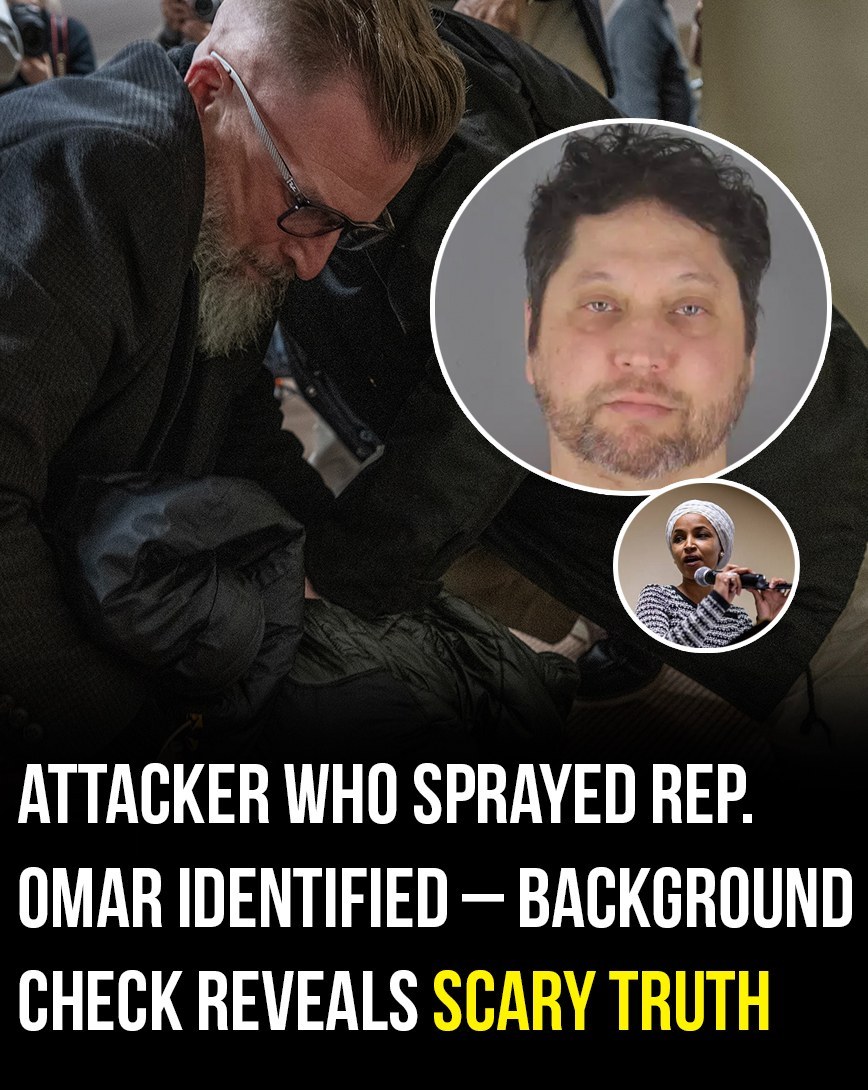
The event, designed to be an open forum for community members to voice their concerns and receive updates on federal policy, was in full swing when the disruption occurred. According to eyewitness accounts and official reports, a man later identified as 55-year-old Anthony Kazmierczak moved toward the stage with a deliberate speed that caught many in the audience off guard. Before security could intervene, Kazmierczak deployed a liquid substance, spraying it directly toward Representative Omar. The immediate reaction was one of confusion and alarm as security personnel moved with practiced efficiency to neutralize the threat, successfully restraining Kazmierczak and removing him from the premises.
In the immediate aftermath, the primary concern was the nature of the liquid used in the attack. Witnesses described a pungent, overwhelming odor that filled the front of the room, raising fears of a chemical or biological threat. Per standard emergency protocols, a hazardous materials (hazmat) team was dispatched to the scene to conduct a thorough evaluation of the substance. While the hall remained under a cloud of uncertainty, Representative Omar displayed a level of composure that has become a hallmark of her public identity. After a brief assessment by the hazmat specialists, it was determined that the liquid did not pose a significant health risk or long-term toxic threat. Despite the harrowing nature of the encounter, Omar declined medical transport, opting instead to return briefly to the podium to reassure her constituents. Her message was clear: while the physical space had been violated, her commitment to the work would not be shaken by acts of cowardice.
The legal fallout for Anthony Kazmierczak began almost immediately. He was booked into custody on suspicion of third-degree assault, though law enforcement officials have signaled that the investigation is far from over. As detectives and federal agents peel back the layers of Kazmierczak’s life, a troubling portrait is beginning to emerge. Authorities have confirmed that he is no stranger to the legal system, possessing a criminal record that includes felony and misdemeanor offenses dating back several years. Furthermore, a review of his personal history revealed a trajectory marked by significant financial instability and social isolation—factors that investigators often look at when trying to understand the catalysts for erratic behavior.
Perhaps more alarming are the digital footprints Kazmierczak left behind. Investigators have spent the last several days scouring publicly available online posts associated with him, which reportedly contain a litany of intense and highly polarized political opinions. While the FBI and local police have been careful to state that they have not yet officially determined if a specific ideology served as the direct motivation for the assault, the presence of such rhetoric provides a somber context for the attack. In an age where digital echo chambers can amplify grievances, the transition from online vitriol to physical confrontation remains a primary concern for domestic intelligence agencies.
Following the incident, Representative Omar spoke candidly about the environment in which she and her colleagues must now operate. She noted that the volume and intensity of threats against her person have reached unprecedented levels, often spiking in direct correlation with specific political narratives or high-profile media coverage. She argued that the assault in Minneapolis cannot be viewed in a vacuum; rather, it is the physical manifestation of a sustained period of inflammatory rhetoric directed not just at her, but at the diverse communities she represents. For Omar, the incident serves as a grim validation of her long-standing warning that words, when weaponized by those in power, eventually find their way into the hands of those willing to act on them.
The broader context of this attack is part of a documented and disturbing trend. Over the last several years, there has been a measurable increase in threats and physical confrontations targeting public servants across the political spectrum. What were once considered safe spaces for democratic exchange—town halls, school board meetings, and local rallies—have increasingly required the kind of heavy security presence usually reserved for high-stakes international summits. Lawmakers from both sides of the aisle have expressed a growing anxiety that the very openness that makes American democracy unique is now being used as a vulnerability by those looking to bypass the ballot box in favor of intimidation.
The investigation into the Minneapolis assault is now a multi-agency effort, with the Federal Bureau of Investigation working alongside local police to determine if Kazmierczak acted alone or if he was part of a larger network of radicalized individuals. This review extends beyond the individual to the very nature of public safety at civic events. Security experts are currently analyzing the breach to see how Kazmierczak was able to get so close to the stage with a concealed substance, a finding that will likely influence how town halls are protected moving forward. There is a delicate balance to be struck: if security becomes too claustrophobic, the vital connection between a representative and their constituents is lost; if it remains too relaxed, the risk to life becomes untenable.
Representative Omar has remained undeterred, continuing her legislative schedule and appearing at scheduled events with a visible security detail but an unchanged message. She has doubled down on the idea that the “theater of democracy” must remain open to all, insisting that to retreat in the face of violence is to give the aggressor exactly what they want. As the case against Kazmierczak moves toward the prosecutorial phase, the findings of the inquiry will be watched closely by officials nationwide.
The Minneapolis incident stands as a stark reminder of the challenges inherent in modern governance. It highlights the volatile intersection of mental health, political polarization, and the ease of access to public figures. As the investigation continues, the focus remains on ensuring that the public square remains a place of debate rather than a site of violence. For Representative Omar and her colleagues, the goal is to ensure that the facts of the case dictate the legal outcome, while the values of the democratic process continue to dictate the nature of their service—free from the shadow of fear and the escalation of unchecked hostility.