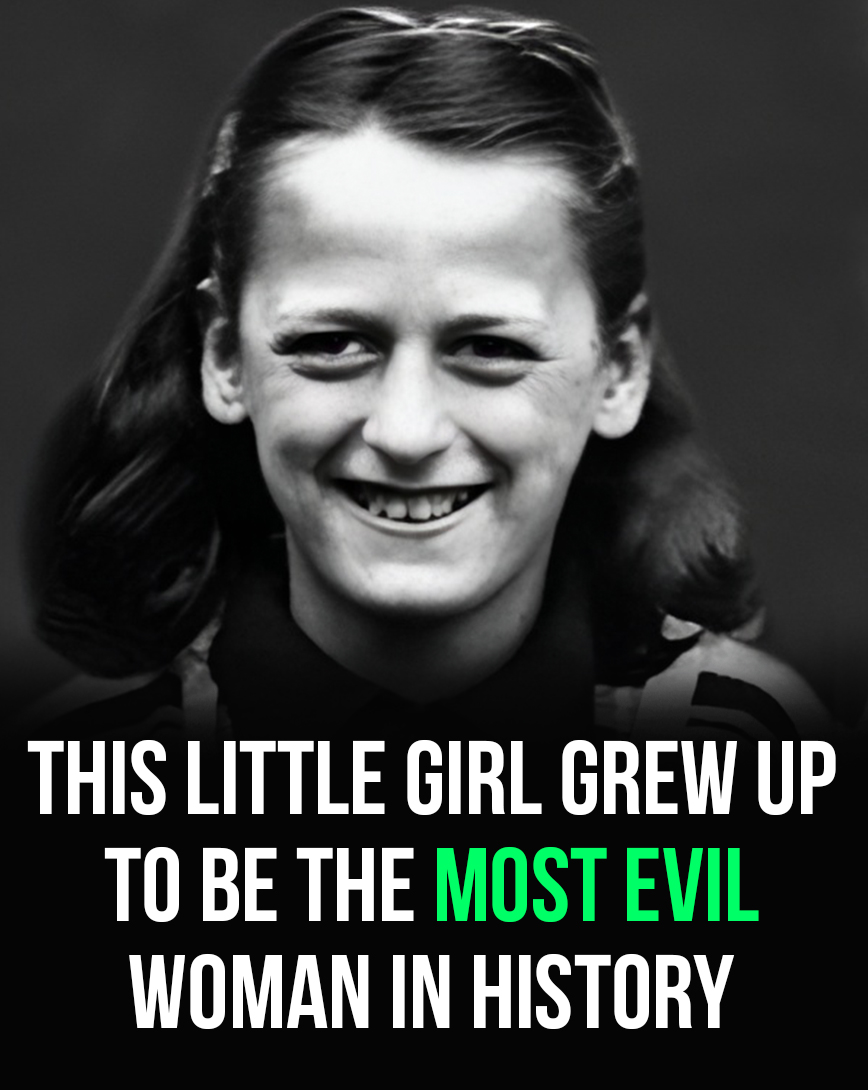
This innocent little girl grew up to be the most evil woman in history
On the surface, she looked like an ordinary child — shy smile, neat hair, the kind of girl you might pass in a schoolyard without a second thought. But decades later, those childhood photographs would take on a far darker meaning.
The girl was Myra Hindley — a name that would become permanently etched into British criminal history.
A Troubled Beginning in Manchester
Born on July 23, 1942, in Gorton, Manchester, Hindley grew up in a cramped working-class home during the final years of World War II. Her father, Bob, served as an aircraft fitter and spent long periods stationed abroad in North Africa, Cyprus, and Italy. Her mother, Nellie, worked as a laborer.
The family’s home was modest and overcrowded. As a child, Hindley slept in a single bed positioned beside her parents’ double bed — a detail that later drew attention when investigators examined her upbringing.
After the war, her father reportedly struggled with depression and alcoholism. Accounts describe frequent domestic violence directed at Nellie. Hindley was sometimes sent to live with her grandmother, Ellen, escaping the worst of the turmoil but never fully removed from it.
Despite the instability, she later claimed her father taught her to defend herself. When a boy scratched her face at around eight years old, her father allegedly ordered her to fight back. She later recalled the incident as her “first victory,” a memory that would be revisited by psychologists seeking insight into her later behavior.
Experts often point to early exposure to violence, emotional instability, and chaotic home environments when examining serial offenders. Still, it is important to note that many children endured similar hardships in post-war Britain without descending into criminality.

A Teenager Marked by Loss
As a teenager, Hindley formed a close bond with a local boy named Michael. In 1957, he drowned at a reservoir after inviting her to swim — an outing she had declined. The tragedy reportedly left her deeply shaken, and she later turned toward Roman Catholicism with renewed intensity.
Outwardly, her teenage life appeared conventional. She worked as a junior clerk, attended dances, went to the cinema, and socialized like many young women of her era. Colleagues described her as friendly. Yet there were small signs of a harder edge: she practiced judo and was known for refusing to release her grip during holds.
A brief engagement to a teenage boyfriend ended when she decided he could not offer her the life she envisioned.
Then she met the man who would change everything.

The Fatal Bond With Ian Brady
During a job interview at a chemical company in Gorton, Hindley met Ian Brady. The attraction was immediate and intense. She later described it as a “fatal attraction.”
Their relationship quickly grew darker. They bonded over literature and poetry, but Brady introduced her to nihilistic philosophy and the writings of the Marquis de Sade. Investigators later concluded that Brady’s influence played a central role in shaping the pair’s criminal trajectory.
By 1963, the couple began committing murders that would horrify the United Kingdom. Known collectively as the Moors Murders, their crimes targeted children and teenagers, many of whom were buried on Saddleworth Moor.
Victims included Pauline Reade (16), John Kilbride (12), Keith Bennett (12), Lesley Ann Downey (10), and Edward Evans (17). The murder of Evans ultimately led to their arrest after Hindley’s brother-in-law, David Smith, reported witnessing Brady attack him.
Keith Bennett’s remains were never recovered, despite searches continuing decades later.

Trial, Infamy, and Life Imprisonment
When Brady and Hindley stood trial in 1966, the nation watched in shock. Hindley’s mugshot — featuring her peroxide-blonde hair and unblinking stare — became one of the most notorious images in British media history.
Security at the courtroom was so tight that bulletproof glass was installed amid fears of vigilante violence.
Brady showed little remorse and openly embraced his notoriety. Hindley, by contrast, later attempted to distance herself from full responsibility, though she admitted involvement.
Both were sentenced to life imprisonment. Hindley would remain incarcerated for the rest of her life, repeatedly denied parole despite claims of rehabilitation.
She died in 2002 at age 60 from bronchial pneumonia. Brady died in 2017.

A Lasting Cultural Shadow
The crimes committed by Hindley and Brady continue to cast a long shadow over British society. Hindley was labeled by sections of the press as “the most evil woman in Britain,” and her image became symbolic of what commentators described as “feminine evil.”
Her face resurfaced repeatedly in media discussions, documentaries, and even controversial art exhibitions — including the 1997 Sensation exhibition’s piece titled Myra, constructed from children’s handprints.
The story of Myra Hindley remains one of the most disturbing chapters in U.K. criminal history. Her childhood photographs, once ordinary snapshots of a post-war girl growing up in Manchester, now stand as haunting reminders of how profoundly human lives can diverge — and how the line between innocence and atrocity can become tragically blurred.